Environmental
Suntop is recognised as one of the leading ESG-focused retail fixture suppliers in our industry, with multiple awards and honours from customers, industry associations and government agencies. Our long-term sustainable development strategy is to built around clear Environmental, Social and Governance (ESG) principles, which guide how we design, source, manufacture and operate. The following pillars set out how we turn those principles into concrete actions across environmental responsibility, social commitment and governance integrity.
- Solar power systems
- Take-back and repurpose programme
- Sustainable materials
-
Suntop has installed solar panels in its factories to promote energy savings and reduce emissions. The Xiamen headquarters generates about 800,000 kWh annually, while the Changtai factory produces around 710,000 kWh, collectively reducing carbon emissions by approximately 1,248 tons.

-
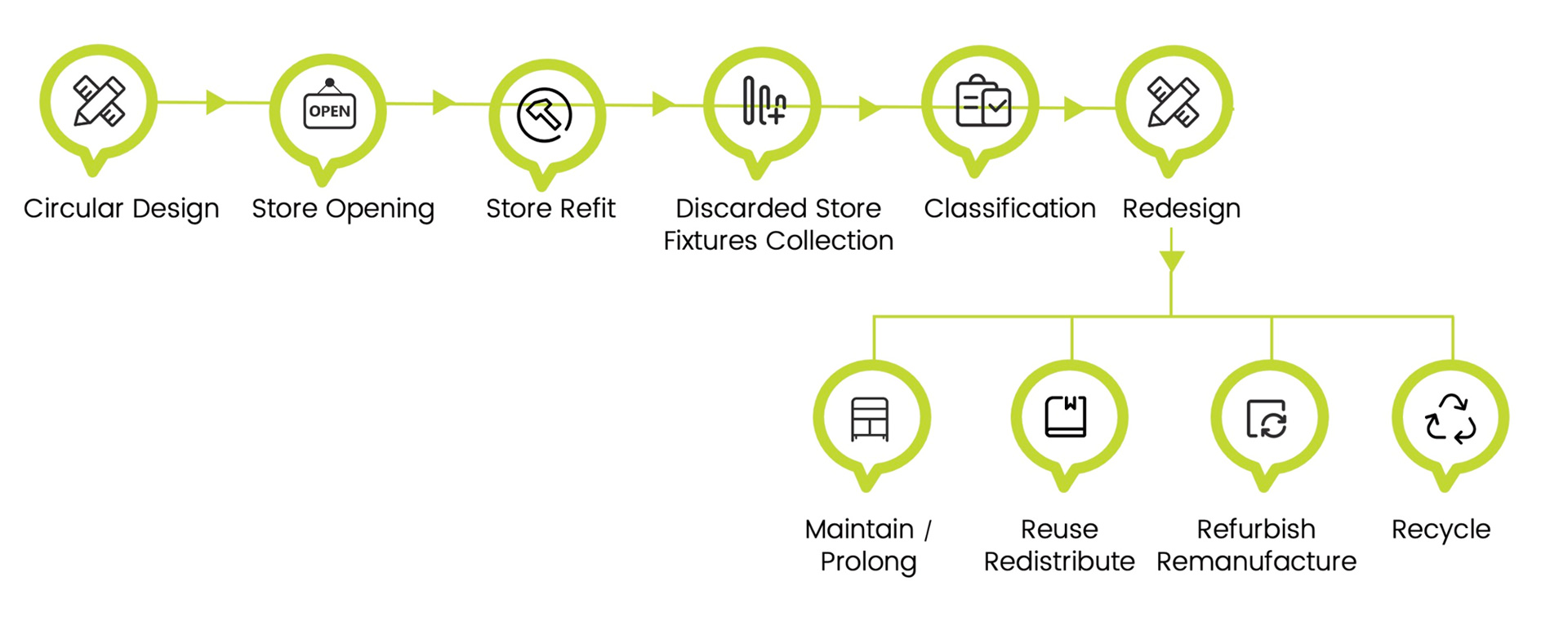
Suntop's circularity design process is essential to our commitment to creating sustainable fixtures that respect the environment and meet client needs. By embracing circular design principles, collaborating with stakeholders, and conducting life cycle analyses, we minimise waste and enhance resource efficiency in every project. Our iterative approach, including prototyping and testing, guarantees that our products are both durable and eco-friendly. Ultimately, we aim to close the loop on resource use through refurbishment and recycling, enabling brands to forge sustainable connections with their customers while contributing to a healthier planet.

Since 2023, we have taken back fixtures from over 6,500 retired adidas stores in Mainland China to recycle, remanufacture, and reuse
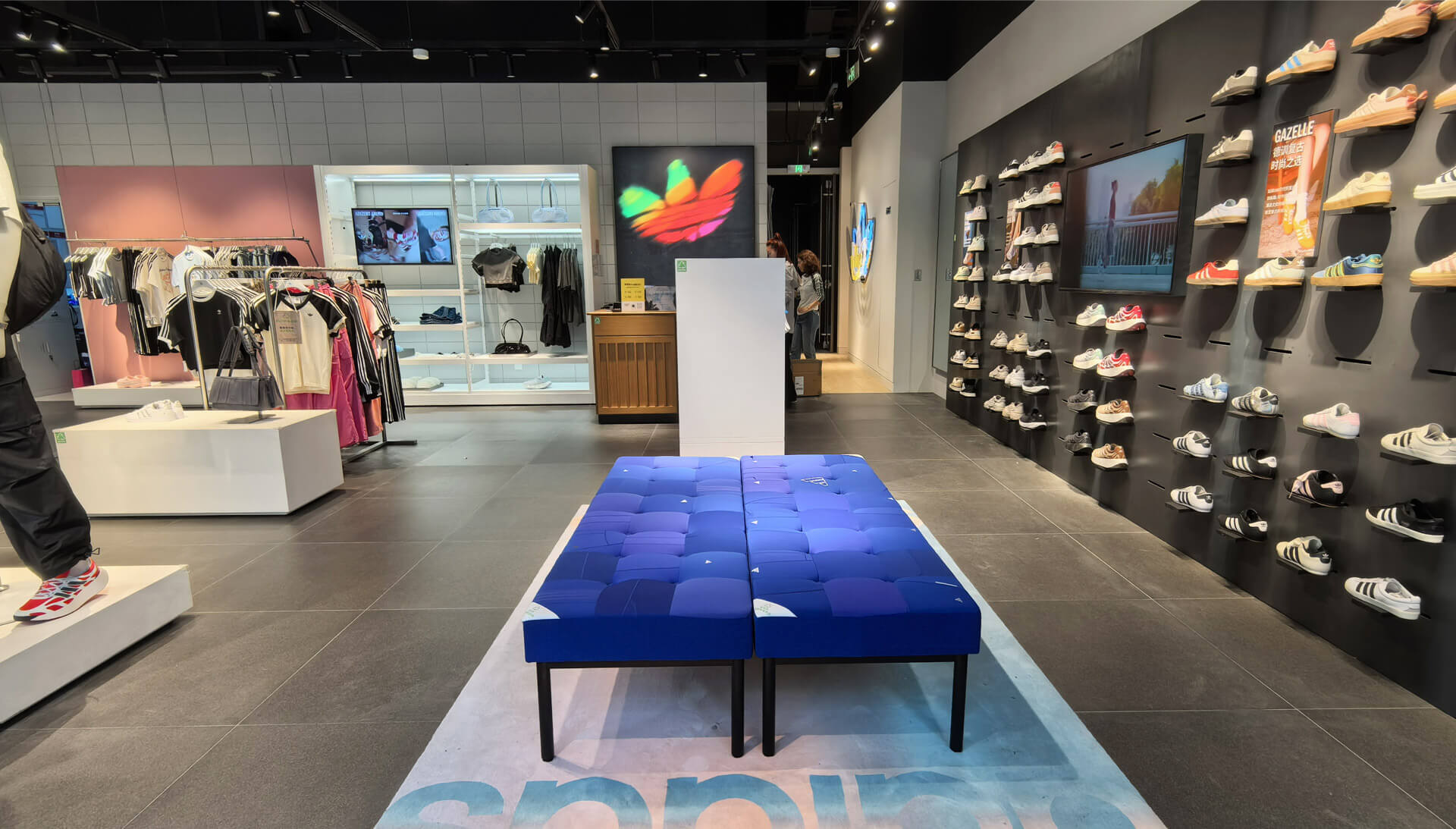
Over 7,750 tons of recovered steel fixtures resulted in a reduction of approximately 13,950 tons of CO2 emissions
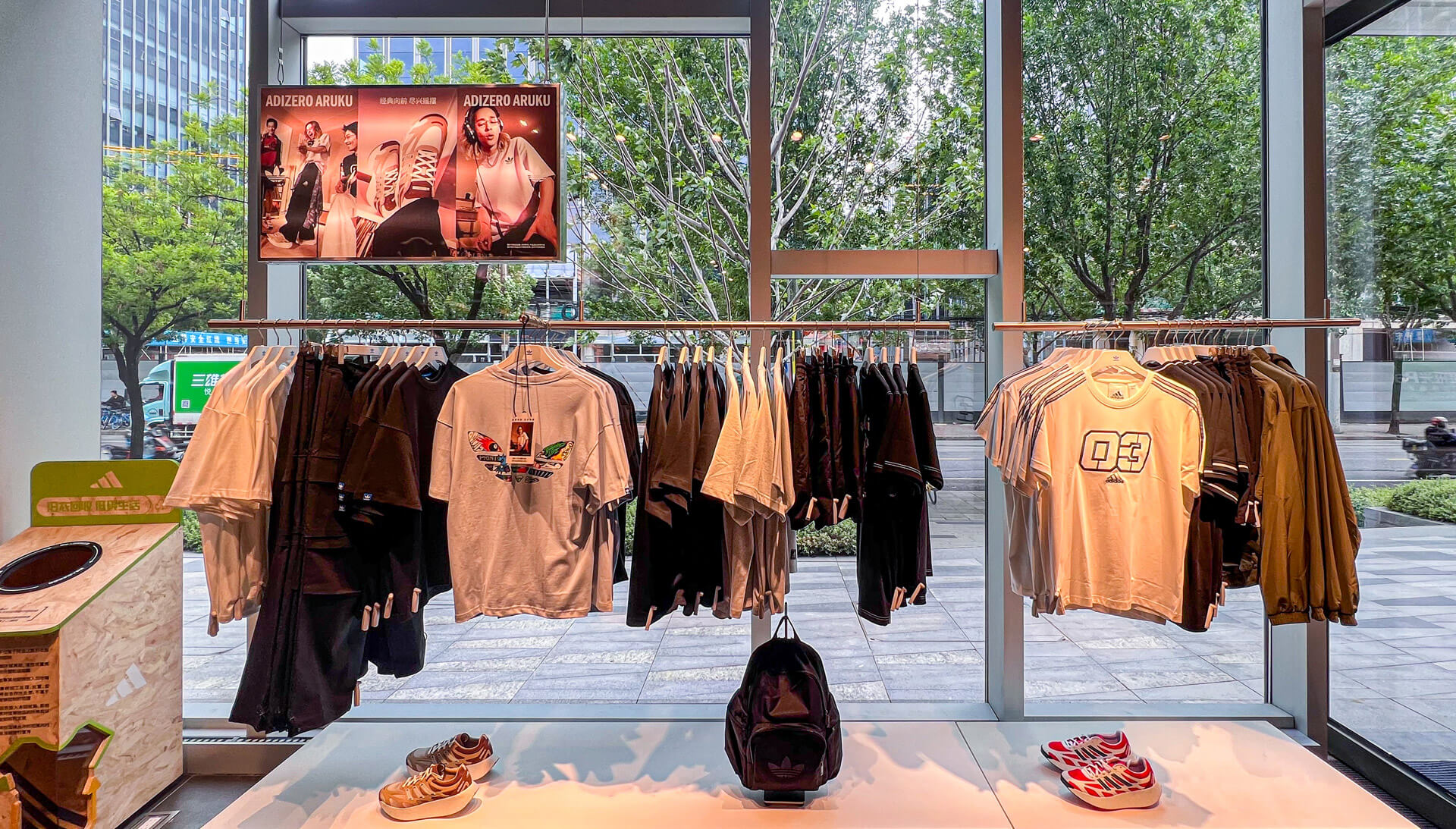
After remanufacturing, these fixtures gained a new lease of life and are now used in over 90 adidas stores
Since 2023, we have taken back fixtures from over 6,500 retired adidas stores in Mainland China to recycle, remanufacture, and reuse
Over 7,750 tons of recovered steel fixtures resulted in a reduction of approximately 13,950 tons of CO2 emissions
After remanufacturing, these fixtures gained a new lease of life and are now used in over 90 adidas stores
-
We encourage our clients to use sustainable materials such as aluminium, bamboo boards, and palm wood boards wherever possible. Aluminium is highly durable and can be recycled repeatedly without loss of quality, typically using less energy and generating fewer emissions than the recycling of steel for similar uses. Bamboo boards, made from fast-growing renewable bamboo, and palm wood boards, produced from sustainably managed palm fibres, both reduce reliance on traditional timber while turning underused resources into functional materials with distinctive natural textures. Together, these materials provide practical, attractive options that support lower-impact, more circular fixture design.

Reusing 1 ton of aluminium can save about 13,300 kWh of energy and reduce carbon emissions by approximately 12 tons

Bamboo panels: Derived from fast-growing renewable bamboo, reduce dependence on forests.

Palm panels: Sourced from sustainably managed palm fibers, waste repurpose.
Reusing 1 ton of aluminium can save about 13,300 kWh of energy and reduce carbon emissions by approximately 12 tons
Bamboo panels: Derived from fast-growing renewable bamboo, reduce dependence on forests.
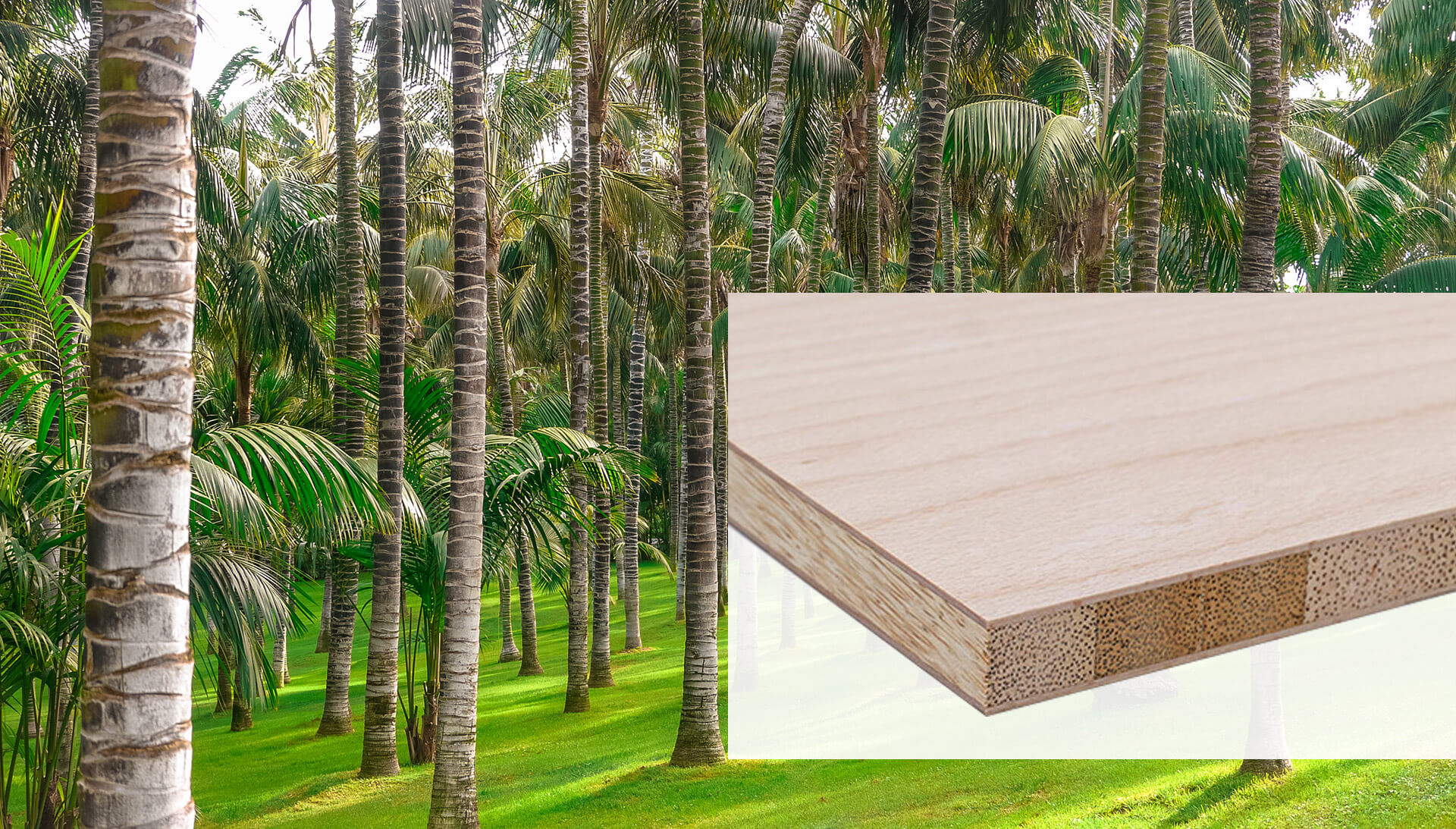
Palm panels: Sourced from sustainably managed palm fibers, waste repurpose.
-
Environmental Responsibility
• Low-carbon production processes
• Sustainable material selection
• Environmental impact reduction throughout value chain
• Eco-friendly manufacturing practices -
Social Commitment
• Focus on vulnerable groups (left-behind children)
• Educational support programs
• Community infrastructure improvements
• Employee welfare and development
• Youth leadership initiatives -
Governance Integrity
• Compliance-driven management
• Responsible business practices
• Transparent partner collaboration
• Ethical decision-making
• Inclusive growth principles


 Tel:
Tel: Email: